

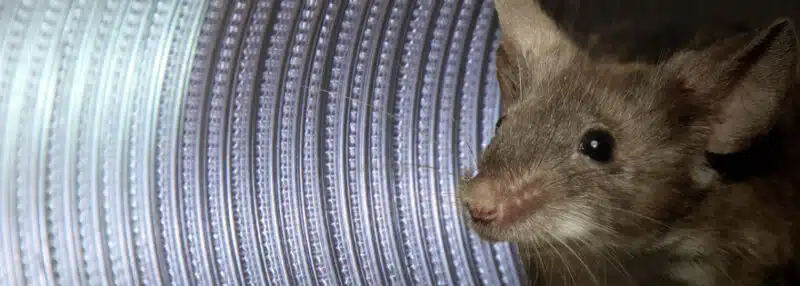
On a cold day, is there anything better than putting on your favorite sweater or blanket fresh out of the dryer while it’s still warm? Unfortunately, mice enjoy the warmth of your clothes dryer just as much as you do. For rodents looking for a warm place to wait out the cold, a dryer vent is one of the easiest ways to get inside your cozy home.
Can Mice Get Into The House Through Dryer Vents?
Yes, mice, along with other rodents, bugs and pests, can use household dryer vents as a pathway to get inside your home. Most homes with a laundry dryer inside have vents on the outside where the warm, moist air escapes. If the outside vent is uncovered or damaged, rodents and other household pests can easily get inside.
Once they enter through the vent, they can chew through the flexible tubing that connects to the actual appliance, giving them free access to the rest of your house.
A few common reasons mice get into dryer vents include:
- The vent tube has a hole in it.
- The vent tube is not properly sealed against the appliance or wall.
The vent flapper on the outside of the house isn’t working properly (or it’s missing entirely). As vent covers get old, the flaps can stop working which allows rodents and bugs to get into vents with ease.
Signs to Look For
Here are some clues that you may have a mouse problem in your dryer vent:
- Strange noises such as squeaking, scratching, scurrying or thumping sounds near the washer and dryer. The phrase ‘quiet as a mouse’ is a lie, and when the sounds of noisy rodents are amplified by the thin metal and hollow sound effects of a vent, you’ll know why.
- Inefficient or ineffective performance of your appliance.
- Your dryer smells like urine.
- Unpleasant odors.
- Finding small black pellets, similar to rice in size and shape – these are mouse droppings.
- Broken or damaged vent covers on the exterior of your home or building.
What Problems Can This Cause?
If mice or any other animal takes up residence in your laundry vent, you’ll be facing a long laundry list of problems. This can certainly cause issues and could eventually lead to ruining your dryer.
The appliance’s efficiency will suffer if the vent is obstructed by a mouse nest or any rodent-related debris. The risk of fire increases when there are airflow blockages, as well. There are thousands of dryer fires annually, and failure to clean the lint is a leading cause of fire.
All that built-up dryer lint isn’t just a potential fire hazard, it can also create a pest haven. Pests coming through the dryer exhaust vent would be very happy to find an abundant supply of soft nesting material. Rodents love to chew all the time and will gnaw on electrical cables and wiring, which is how a house fire can happen.
Other possible issues include the diseases rodents can transmit, the terrible smell that will result if a rodent dies in a hard-to-reach area, and the overall “ick” factor of dealing with this problem.
How to Get Rid of Mice in Your Dryer Vent
Regardless if a rodent is alive or dead, you must approach getting rid of them with safety.
To remove a live mouse from a dryer vent, follow these steps:
- Unplug the dryer: If you suspect the mouse is still alive, unplug the dryer and do not use it until the removal process is complete.
- Block the vent opening at the appliance: Block the opening where the vent hose connects to the dryer so they can no longer get into the appliance itself. This means their only option will be to stay in the vent hose or exit back outside.
- Check for signs of rodents: Continue to check the vent covers outside of your home and the laundry room for signs of rodents until you are certain they have left.
- Seal and secure the exterior vent: Ensure the exterior vent is sealed, add a mesh wire cover, and replace your vent hose.
- Clean and sanitize: Sanitize and clean the laundry areas, plug the appliance back in, and then resume using your dryer.
To remove a dead mouse from a dryer vent, follow these steps:
- Turn Off the Dryer: Ensure the dryer is turned off and unplugged.
- Wear Protective Gloves: To protect yourself from germs and bacteria, wear thick gloves.
- Prepare a Container: Have a bag or container that seals ready to safely transport the mouse outside.
- Locate the Mouse: Carefully inspect the dryer and vent to locate exactly where the mouse is. Place it in the container and seal it tightly.
- Move to Outdoor Trash: Place the container in an outdoor trash receptacle.
- Seal the Vent: After the mouse is removed, inspect and repair any damage to the vent.
- Sanitize the Area: Clean and sanitize the area around the vent to eliminate any droppings or urine left by the mouse. Follow these tips when cleaning up after rodents.
If you don’t feel comfortable removing a rodent or feel the infestation may be larger than you thought, contact a pest control company for help.
How to Keep Mice Out of Dryer Vents

Homeowners can help prevent a mouse problem by spending a few moments rodent-proofing their laundry area. The best way to get rid of mice is to keep them from getting in, which can save you time and money in the end. Here are some tips on how to mouse-proof your dryer vent to prevent future issues:
- Do an annual cleaning of your vent and hose (along with a lint check each time you use the appliance) – Dryer vent cleaning is great to prevent general lint buildup (which can cause fires), but also to check for signs of rodents, birds, or bugs getting into the vent throughout the year.
- Clean up rodent attractants – This includes cleaning up items such as standing water, pet food, birdseed, and other food sources in your laundry area. Storing items in sealed bins (and off the floor) removes easy attractants.
- Seal up potential entry points – Make sure the vent hood is in good repair, doors, and windows shut tightly with no small openings, and that there are no gaping cracks or holes along the building foundation.
- Inspect and replace damaged vent flappers – Even if the vent flap looks functional, older plastic flappers can warp, crack, or stick open. A quick inspection every few months ensures the flaps close tightly when the dryer isn’t running.
- Install a wire mesh cover – The outside opening of the vent is especially vulnerable but can be covered with a wire mesh cover available at most hardware stores. One thing to note is that dryer screens can cause faster lint buildup, which can be a fire hazard.
- Seal the edges of the outside vent – Use steel wool (mice can’t chew through it) and silicone caulk around the edges of the outside dryer vent and to fill other small cracks or openings you may find (don’t seal up the vent opening because the heat needs to get out!). This is easy enough to DIY, but a repairman or HVAC specialist can do this, too.
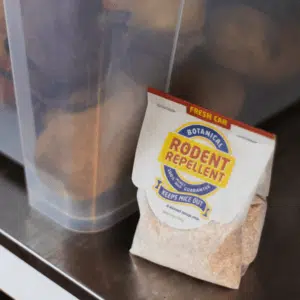
- Use a rodent repellent – Using a botanical rodent repellent throughout your home will help to keep mice and rats out of all areas.
- Keep vegetation trimmed around the vent – Tall grass, shrubs, stacked firewood, and groundcover near the vent create cover and hiding places that attract rodents. Keep the area clear so they’re less likely to linger.
You can purchase specialty products designed specifically to keep critters out of the laundry area, such as screens or mouse-proof dryer vent covers.
How Should You Clean a Dryer After a MouseInfestation?
If you had mice, or any other rodent living in your vent, the vent tube is likely full of unsanitary droppings, nesting material, food crumbs, and terrible odors. We don’t recommend cleaning the vent hose. The best thing you can do is fully replace it. They are typically inexpensive and easy to find at hardware stores.
You must clean the internal areas of the dryer where mice might have traveled, otherwise you might have to live with a terrible smell for months. You’ll need to unplug and pull out the unit to get access.
Where the tube connects to the back of the dryer, use a sturdy pair of gloves to reach in and pull out any lint or leftover debris. You might need to remove the front and rear panels to get full access. Be careful, because you might find a dead mouse or disease-carrying droppings in there!
We highly recommend wearing a mask. Mice can’t usually get through the ventilation system of your dryer from the lint trap and into the drum, so that shouldn’t be a problem, but look for signs just to be sure.
You should also clean and sanitize the vent where the tube connects to the house and leads outside.
Prevent Mice From Coming Back
Getting rid of mice is critical for your own health and safety. Preventing pest problems and infestations from happening again is important to protect your appliances and save you from expensive repair bills and replacement costs.
Fresh Cab® Rodent Repellent is 100% effective, guaranteed. Unlike lethal mouse traps or poisons, this scent-based repellent is a pest control method that is made with botanical ingredients. Mice follow their noses to find food and to detect danger — the fresh scent of essential oils in Fresh Cab® overwhelms their highly sensitive scent receptors, causing them to flee the area.
Place the pouches wherever you have seen signs of rodent activity. Leave the pouches in place for a few days to allow the mice to escape, then inspect your dryer vent and surrounding area to seal up any entry points so pests can’t get inside again. Shop Fresh Cab® Rodent Repellent online or at a store near you.
Source link

.jpg)

![Paper Hand Towel [1 Roll] Natural Brown [8″ x 350 ft] 1 Ply Hardwound Universal 100% Recycled Fiber Compatible with Tork Dispensers Restrooms Kitchen (Natural, 8″ x 350 ft)](https://ecologicnomad.com/wp-content/uploads/2025/09/813WUdzUiWL._AC_SL1500_-300x300.jpg "Paper Hand Towel [1 Roll] Natural Brown [8″ x 350 ft] 1 Ply Hardwound Universal 100% Recycled Fiber Compatible with Tork Dispensers Restrooms Kitchen (Natural, 8″ x 350 ft)")