

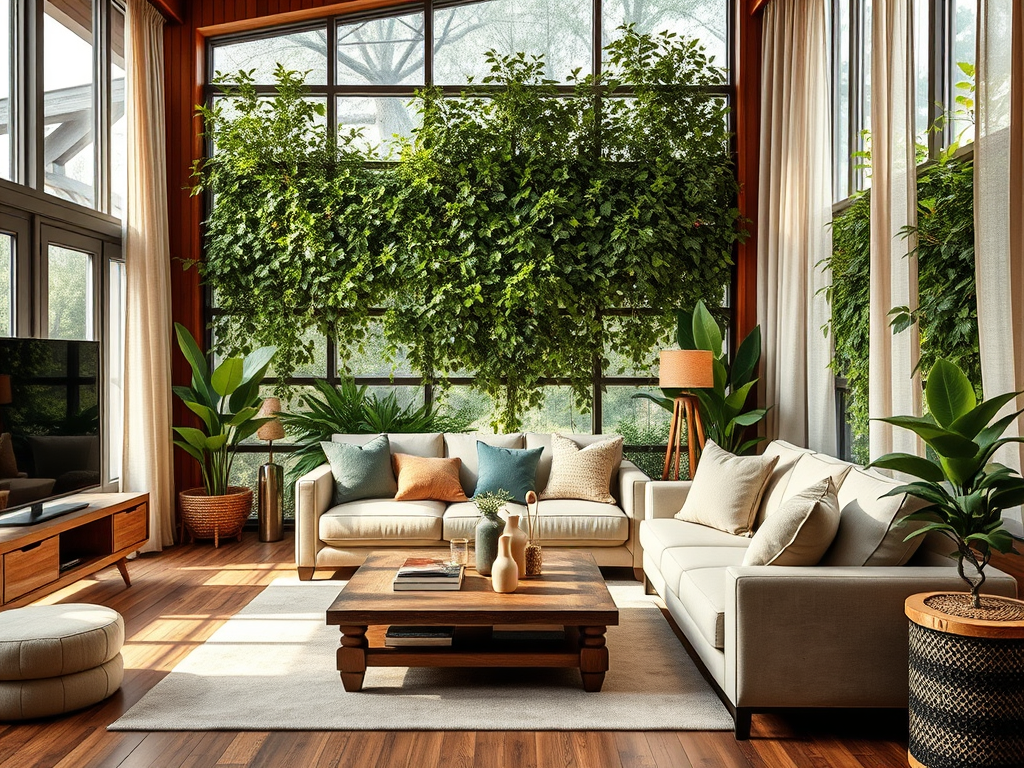
Incorporating eco-friendly elements into your home is not just a trend—it’s a lifestyle choice that blends sustainability with style. Your living room, often the heart of the home, is the perfect place to start. By embracing an eco-friendly living room design, you can create a space that’s beautiful, functional, and environmentally responsible.
In this comprehensive guide, we’ll explore unique and sustainable ideas that go beyond the basics to help you craft the ultimate eco-friendly living room.

Why Choose an Eco-Friendly Living Room Design?
An eco-friendly living room design isn’t just about adding plants or using bamboo chairs—it’s about a holistic approach to sustainability. It focuses on:
- Reducing environmental impact by using sustainable materials.
- Creating energy-efficient spaces.
- Incorporating timeless designs that minimize waste.
- Enhancing indoor air quality and promoting well-being.
Step 1: Plan a Sustainable Layout
The foundation of an eco-friendly living room begins with smart planning:
Maximize Natural Light
- Position your furniture to take advantage of natural light during the day.
- Use sheer, sustainable curtains made of hemp or organic cotton to let light in while reducing heat loss.

Open-Concept Design
- Opt for an open layout to reduce the need for extra walls and materials.
- Improve air circulation with strategically placed windows and plants.
Space Optimization
- Choose multi-functional furniture like storage ottomans or modular sofas to save space and reduce clutter.
Pro Tip: Open layouts with natural light not only reduce energy consumption but also make small spaces feel expansive.
Step 2: Choose Sustainable Materials
Material choice plays a crucial role in an eco-friendly living room design.
Reclaimed and Repurposed Wood
- Use reclaimed wood for flooring, coffee tables, or accent walls.
- Create a rustic yet modern look by mixing wood tones and textures.

Natural Fiber Upholstery
- Select furniture upholstered with organic cotton, linen, or wool.
- These materials are biodegradable and free of harmful chemicals.
Eco-Friendly Flooring Options
- Consider bamboo, cork, or reclaimed wood flooring for durability and sustainability.
- Rugs made from jute or sisal can complement the flooring while adding warmth.
Step 3: Energy-Efficient Design Elements
Energy efficiency is a cornerstone of sustainable living:
Smart Lighting Solutions
- Install LED or solar-powered lighting fixtures to reduce electricity usage.
- Choose fixtures made from recycled glass or metal for added sustainability.

Energy-Efficient Windows
- Double-glazed windows provide excellent insulation and reduce heating and cooling costs.
- Add thermal curtains or blinds for enhanced energy efficiency.
Smart Home Integration
- Use smart thermostats and dimmable lights to optimize energy use.
- Consider solar panels for powering small electronics or charging stations.
Step 4: Eco-Friendly Decorative Touches
Your living room decor can make a big statement while staying sustainable:
Indoor Vertical Garden
- Create a living wall using native plants for natural air purification.
- Use recycled frames or pallets as the base structure.

Custom Art from Recycled Materials
- Commission unique pieces made from reclaimed wood, metal, or glass.
- Showcase handcrafted decor to support local artisans and reduce mass production.
Natural Color Palettes
- Use eco-friendly paints with low or zero VOCs in earthy tones like olive green, terracotta, or beige.
- Sustainable wallpapers made from natural fibers can add texture and personality.

Step 5: Design for Longevity and Multi-Functionality
Investing in durable, versatile furniture ensures your living room remains sustainable for years:
Timeless Furniture Styles
- Choose classic designs that won’t go out of style to avoid frequent replacements.
- Look for high-quality, sustainably sourced wood or metal frames.
Multi-Functional Pieces
- Opt for sofas that convert into beds, or coffee tables with built-in storage.
- Modular furniture allows for reconfiguration, adapting to changing needs.

Pro Tip: Furniture longevity reduces waste and aligns perfectly with eco-conscious principles.
Step 6: Eco-Friendly Tech Integration
Technology can support sustainability when chosen wisely:
Energy-Saving Gadgets
- Install smart plugs to monitor and reduce energy usage.
- Use eco-friendly smart speakers and entertainment systems that prioritize efficiency.
Hidden Charging Stations
- Design discrete charging docks made from recycled materials to avoid clutter.
Step 7: Showcase Nature-Inspired Design Concepts
Bring the outdoors in with biophilic design:
Nature-Inspired Patterns and Textures
- Incorporate textures like stone, wood grain, or woven elements to mimic natural landscapes.
- Choose cushions and throws with organic patterns.
Indoor Water Features
- Add a small fountain with a recirculating system for a calming effect.
- Use sustainably sourced stones for the base design.
Step 8: Maintain Your Eco-Friendly Living Room
An eco-friendly design doesn’t stop at implementation—it requires mindful upkeep:
- Use green cleaning products to maintain surfaces and air quality.
- Regularly assess your energy usage and make adjustments where necessary.
- Rotate decor items to keep the space fresh without over-purchasing.
Conclusion: Sustainable Style, Simplified
Designing an eco-friendly living room goes beyond aesthetics—it’s about creating a space that reflects your commitment to the environment. From sustainable materials and energy-efficient lighting to timeless furniture and natural elements, every choice you make contributes to a healthier planet.
Start your journey to a more sustainable home today and enjoy the perfect blend of beauty and responsibility.
Explore more eco-friendly home design ideas on our blog and share your favorite tips in the comments!

FAQs About Eco-Friendly Living Room Design
1. What is eco-friendly living room design?
An eco-friendly living room design focuses on creating a sustainable and environmentally conscious space. It involves using materials that are renewable, recycled, or biodegradable, incorporating energy-efficient lighting and appliances, and embracing designs that promote natural ventilation and lighting.
2. How can I make my living room eco-friendly?
You can make your living room eco-friendly by:
- Using sustainable materials like bamboo, cork, and reclaimed wood.
- Opting for energy-efficient lighting such as LED or solar-powered fixtures.
- Incorporating natural elements like an indoor vertical garden or natural fiber rugs.
- Choosing low-VOC paints and eco-friendly furniture.
3. What are the best materials for eco-friendly furniture?
The best materials for eco-friendly furniture include:
- Reclaimed wood
- Bamboo
- FSC-certified wood
- Recycled metal
- Organic upholstery fabrics such as cotton, linen, or hemp
These materials are sustainable, durable, and reduce your environmental impact.
4. Are eco-friendly living rooms expensive to design?
Not necessarily. While some sustainable materials may have a higher upfront cost, they often last longer and reduce energy bills over time. You can also repurpose furniture, DIY decor using recycled materials, or shop second-hand to save money while being eco-friendly.
5. What are the benefits of eco-friendly living room design?
An eco-friendly living room design offers numerous benefits, including:
- Reducing your carbon footprint.
- Improving indoor air quality.
- Lowering energy consumption and utility bills.
- Creating a healthier, more sustainable living environment.
6. Can I create an eco-friendly living room in a small space?
Yes! Small spaces can also be transformed into sustainable havens by:
- Maximizing natural light with large windows and sheer curtains.
- Choosing multi-functional furniture like storage ottomans.
- Adding space-saving vertical gardens or modular shelving made from sustainable materials.
7. What type of lighting is best for an eco-friendly living room?
Energy-efficient lighting is ideal for an eco-friendly living room. Options include:
- LED lights
- Solar-powered lighting fixtures
- Recycled glass pendant lights
These not only reduce electricity consumption but also contribute to sustainable design.
8. How can I ensure my decor is eco-friendly?
To ensure your decor is eco-friendly:
- Choose handcrafted items made from natural or recycled materials.
- Use low-VOC paints and wallpapers.
- Add indoor plants for natural air purification.
- Support local artisans for sustainable decor options.
9. Can I achieve an eco-friendly design without compromising on style?
Absolutely! Eco-friendly living room designs combine sustainability with style. By using reclaimed wood, natural textiles, and bespoke decor made from recycled materials, you can create a chic, modern, and environmentally conscious space.
10. Where can I find eco-friendly furniture and decor?
You can find eco-friendly furniture and decor at:
- Sustainable furniture brands like IKEA’s eco-range or West Elm.
- Second-hand stores or antique shops.
- Local artisans and markets.
- Online platforms offering upcycled or sustainably crafted products.
Source link





![Paper Hand Towel [1 Roll] Natural Brown [8″ x 350 ft] 1 Ply Hardwound Universal 100% Recycled Fiber Compatible with Tork Dispensers Restrooms Kitchen (Natural, 8″ x 350 ft)](https://ecologicnomad.com/wp-content/uploads/2025/09/813WUdzUiWL._AC_SL1500_-300x300.jpg "Paper Hand Towel [1 Roll] Natural Brown [8″ x 350 ft] 1 Ply Hardwound Universal 100% Recycled Fiber Compatible with Tork Dispensers Restrooms Kitchen (Natural, 8″ x 350 ft)")