


Tick prevention can be complicated. Ticks are sly, cunning little critters that are determined to wedge themselves inside the first warm-blooded host they cross paths with. If it sounds like they’re on the hunt for you, it’s because they are.
In all seriousness, ticks can be a real threat to humans and animals. They can transmit diseases, many of which can be fatal if not treated quickly.
And yet, these mobile disease-spreading forest dwellers do serve a purpose. Yes, even ticks play an important role in our ecosystem. Ticks are at the bottom of the food chain; animals like reptiles, amphibians, and birds rely on ticks for food. They are also very important components of our planet’s biodiversity, as they carry many different living microorganisms.
Since these pesky vermin aren’t going anywhere anytime soon, and we would like to leave the house to be in nature, we have a choice to make. We can either avoid nature altogether for fear of these pests (though who really wants to give up fresh air and peace and quiet?) or we can learn what makes ticks tick. By understanding them, we can steer clear and, more importantly, keep them away from us, allowing us to peacefully coexist with them.
Where Do Ticks Live and How Do They Behave?
Ticks may be small, but their survival tactics are impressive. Understanding where they live and how they find hosts helps explain why they’re such persistent pests and how we can better avoid them.
- Common hosts for Ticks: A tick requires a host for food, and without one, it cannot move onto the next stage of growth in its life cycle. The host can be an animal or a human depending on the species of tick.
- Where you’ll find them:These crafty bugs will sit and wait on tall grass, wooded areas, leaves, or branches while hoping for a host to brush up against them so they can latch onto clothing, skin, or hair. They are also commonly found hiding in leaf piles on the forest floor, and around homes they may linger in shady, damp spots such as wood piles. Once they’ve hitched a ride on a host, they search for the optimal place to hunker down and start feeding. Ticks use their sharp mouthparts to pierce the skin and anchor themselves while feeding.
- What attracts ticks to humans: These pests are very well equipped to sense an optimal host in advance, so they can get ready to attach themselves when the time is right. They can detect a host’s breath, pick up on chemicals via sweat, and sense temperature changes as you approach them. This basically means human hosts are served up on a silver platter! And if that wasn’t enough evolutionary help, some species of ticks can even recognize shadows.So, before you harmlessly brush by some bushes on your next hike, just remember these plotting pests are eagerly anticipating this very move!
Fun fact: Ticks are attracted to ammonia and lactic acid. Ammonia is present in urine, and lactic acid is a chemical produced in the body when you exercise. So, working up a sweat in the outdoors or peeing in the forest may attract ticks.
5 Ways to Prevent Tick Bites and Lyme Disease
There are many simple ways to decrease your chances of getting a tick bite and possibly getting Lyme disease. Most of these methods include preventing ticks from getting on you in the first place. Additionally, none of these methods include spraying yourself with harsh chemicals like DEET.
1. Wear long-sleeve shirts, pants, and socks in the outdoors
When trekking outdoors on a hike—or any outdoor adventure for that matter—wearing fitted clothing that reduces exposed skin is a good idea. Tuck your long pant legs into your socks and tie your hair back to prevent ticks from catching a ride. You can wear light-colored clothing to help you spot one of these pests if it lands on you.
Ticks wait for future hosts by crouching on leaves or branches with their front legs in the air, just waiting for the chance to grab onto something. You give them more opportunities by wearing loose clothing that exposes your skin.
2. Use a good quality tick repellent like Stay Away® Mosquitoes
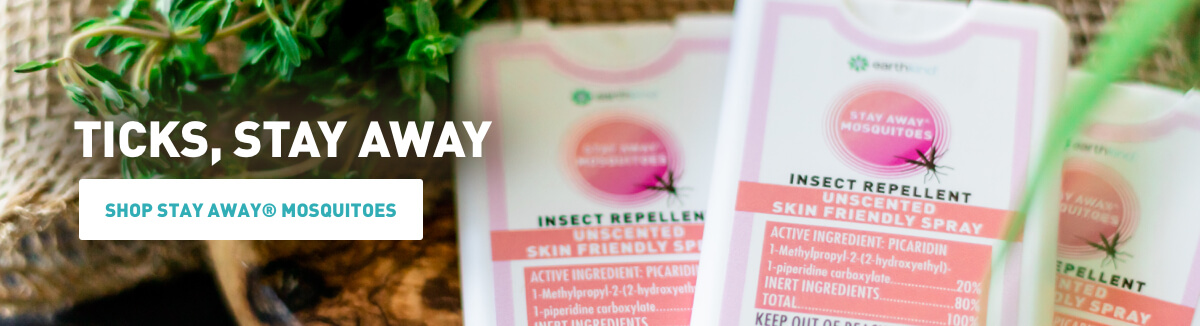
One of the most effective ways to prevent tick bites is to use insect repellent. Stay Away Mosquitoes contains picaridin, a compound that mimics the scent of the black pepper plant, which is known to naturally repel ticks and mosquitoes. Picaridin, which is CDC-recommended, both repels AND deters ticks and other insects.
These pests are repelled by the natural scent and will physically move away when they encounter it. It blocks some insects from being able to sense their prey, and they will refuse to feed if they encounter skin or clothing with picaridin on it.
3. Avoid tick-infested areas
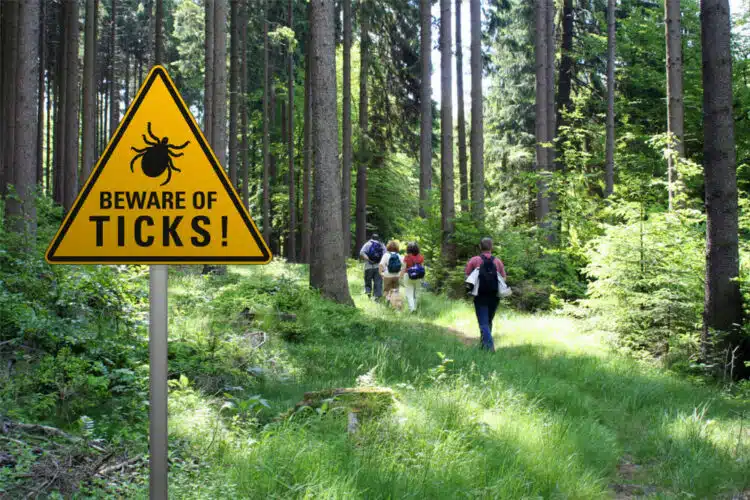
Researching campsites and hiking trails prior to hitting the great outdoors is an easy way to prevent tick bites and the possibility of Lyme disease. The CDC has maps that show locations of ticks by state, along with what diseases they carry. The CDC also has a map that outlines the reported cases of Lyme disease by location. Obviously, one should take extra precautions in states with a high number of reported cases of the disease.
If you’re hiking, try to stay in the center of trails rather than brushing against tall grass or overhanging branches where ticks often wait for hosts. If you are hiking with pets, try to keep them in the middle of the trail as well.
4. Check your body after you spend time outside
Doing a full-body tick check when you get home is always a good idea. These creatures like to feed in moist, warm areas of the body, such as behind your knees, in the armpits, groin area, or scalp. Showering right after being outdoors can also help wash away ticks before they attach.
For extra protection, toss your clothes in a dryer on high heat for at least 10 minutes to kill any ticks that might have come inside with you. Have a pair of fine-tipped tweezers on hand, as they are recommended for safely removing any attached ticks.
5. Remove any tick quickly and watch for symptoms
If you do find one of these pests on your body, the CDC has some tips on safe tick removal. Avoid old remedies like petroleum jelly or rubbing alcohol, which do not safely remove ticks.
Contracting the Lyme disease bacteria from a tick takes time, so if the tick is removed quickly, the risk may be reduced. And remember, not all of them have this bacteria, so just because you were bitten, it does not mean you 100% have Lyme disease. So don’t panic. Review the symptoms of Lyme disease and keep them in mind if you’ve been bitten. If you have any of these symptoms, seek medical help as soon as possible.
What Does A Tick Bite Look Like?
If you believe you may already have a bite, look for these signs:
- Within 2-3 days of a tick bite, the most common identifying mark is a dime-sized red spot. This is likely caused by an allergic reaction to their saliva.
- Some bites will have a hard bump underneath the site of the bite.
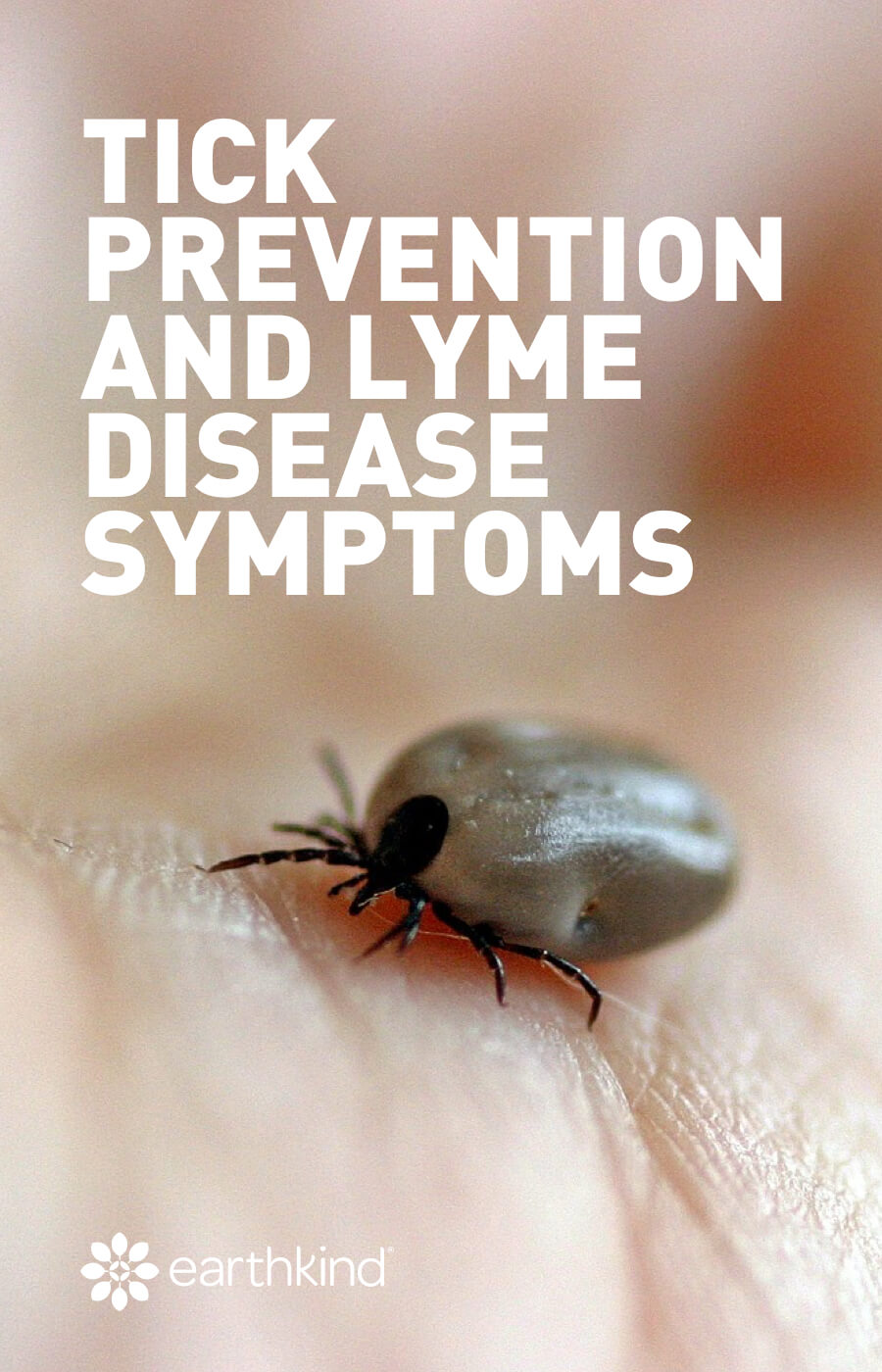
- The tick will look like a small black or brown bug, anywhere from the size of a poppy seed to a pencil eraser.
- The tick’s head will likely be in your skin along with its legs. There might be some redness at the bite area, and in some cases, a hard bump underneath the site of the bite.
When looking for tick bites on your body, there are a few common areas to start. They like to feed in moist, warm areas on the body, such as:
- Behind your knees
- Armpits
- Groin area
- Scalp
- Belly button
Once they’ve made it to the desired destination, the tick will secrete a natural painkiller in its saliva before lodging its head into the skin of the host. Additionally, they will continuously release painkiller saliva so their host never notices. Ruthless.
After the tick breaks through the host’s skin, it’s lunchtime. These pests might look tiny, but they’re hard-core vampires, eating 200 to 600 times their own body weight in blood. They will stay for a few days feeding and then leave when they’re full. The satisfied tick will simply drop off your body and take off to start the next stage in its growth cycle.
Why are Tick Bites Dangerous?
As mentioned above, some ticks can be dangerous to humans as they can transmit many diseases, including Lyme disease, which affects 30,000 Americans every year. Ticks infected with the bacteria Borrelia burgdorferi can transmit Lyme disease.
However, not all of them have this bacterium, but they’re also capable of spreading other bacterial infections, such as anaplasmosis, which can cause fever, chills, and muscle aches. According to the Centers for Disease Control and Prevention (CDC), there are actually two known species of ticks that carry Lyme disease-causing bacteria in the US: the Blacklegged tick and the Western Black-legged tick. These species are native to over 35 states, so chances are you could run into them. Check out this map to see if these types are native to your home state.
Lyme Disease
Lyme disease is an inflammatory disease caused by the bacteria Borrelia burgdorferi, which is transmitted by ticks. Normally, the disease causes an initial rash shaped like an oval or bull’s-eye. The rash can present itself anywhere from 3 to 30 days post-tick bite.
However, more than 30% of Lyme disease patients don’t remember seeing a rash.
Symptoms of Lyme disease include:
- Rashes
- Migraine
- Fever
- Chills
- Swollen lymph nodes
- Muscle soreness.
If the disease goes untreated, one runs the risk of contracting neurological disorders. Fortunately, in most cases, an antibiotic successfully treats the disease. If you experience these symptoms, seek immediate medical attention from a health care provider.
Alpha-gal Allergy
Someone who has been bitten by a tick also runs the risk of reacting with an Alpha-gal allergy. This allergy is a reaction to a sugar molecule transferred via a tick bite. It can be very hard to diagnose if you don’t realize you’ve been bitten.
Symptoms of Alpha-gal allergy include:
- Rash
- Hives
- Difficulty breathing
- Drop in blood pressure
- Dizziness or faintness
- Nausea or vomiting
- Severe stomach pain.
Alpha-gal allergies normally present themselves 3 to 6 hours after eating meat, as cows and pigs can carry this molecule too.
If you experience these symptoms, seek immediate medical attention from a health care provider.
The Causes of Increasing Cases of Lyme Disease
Lyme disease has become a growing concern. For example, 1991 there were about 10,000 reported cases in the US, and in the past 5 years, that number has jumped to an average of almost 30,000 cases annually. Here are a few possible reasons why.
- Climate Change: Experts suggest that climate change is the reason behind the alarming rates of growth in reported Lyme disease cases, as the bacteria that cause Lyme disease are more prevalent after warm winters and springs.
- Longer Tick Lifespans: Warmer weather also increases the chances of survival for ticks (they won’t freeze to death) and hotter temperatures quicken their life cycles. Their eggs hatch sooner and therefore they spend more time hunting for hosts. Higher survival rates and sped-up life cycles mean infectious diseases are transmitted faster.
- Mice Populations: The growth in mice populations is another phenomenon that has caused Lyme disease to take over entire states in a matter of years. White-footed mice, in particular, are responsible for giving ticks the bacteria that causes Lyme disease. Ticks are not born with the bacteria; they’re infected with it after they feed on the mice.
- Deforestation: White-footed mice have seen a massive population growth since the 1980s, due to humans deconstructing forests. When we cut down massive amounts of trees, we end up killing their natural predators, causing unnatural population growth in this species of mice. This means more food for ticks and more Lyme disease for us.
Nature is very delicate; even the tiniest change to the environment can have dangerous outcomes. Peacefully coexisting with all beings is integral to preserving the natural order of life.
Choose a CDC Recommended Tick Repellent
Using a tick repellent is one of the best ways to avoid a tick-borne disease. Ticks are very sensitive. They can pick up on chemicals in your sweat and breath, and any scents that distract them from sensing prey or feeding will naturally send them elsewhere.
EarthKind’s Stay Away Mosquitoes contains the CDC-recommended chemical picaridin. Picaridin both repels AND deters ticks and other insects. These pests are repelled by the scent and will refuse to feed if they encounter it on skin or clothing. Our botanical insect repellent provides 14-hour protection and is even safe enough to use during pregnancy when used as directed.
As the risk of Lyme disease continues to grow due to climate change and industrialization, it’s more important than ever to take proper precautions. Prevention is the key. Shop Stay Away Mosquitoes online or in a store near you.
Source link



.jpg)
.jpg)
![Paper Hand Towel [1 Roll] Natural Brown [8″ x 350 ft] 1 Ply Hardwound Universal 100% Recycled Fiber Compatible with Tork Dispensers Restrooms Kitchen (Natural, 8″ x 350 ft)](https://ecologicnomad.com/wp-content/uploads/2025/09/813WUdzUiWL._AC_SL1500_-300x300.jpg "Paper Hand Towel [1 Roll] Natural Brown [8″ x 350 ft] 1 Ply Hardwound Universal 100% Recycled Fiber Compatible with Tork Dispensers Restrooms Kitchen (Natural, 8″ x 350 ft)")